
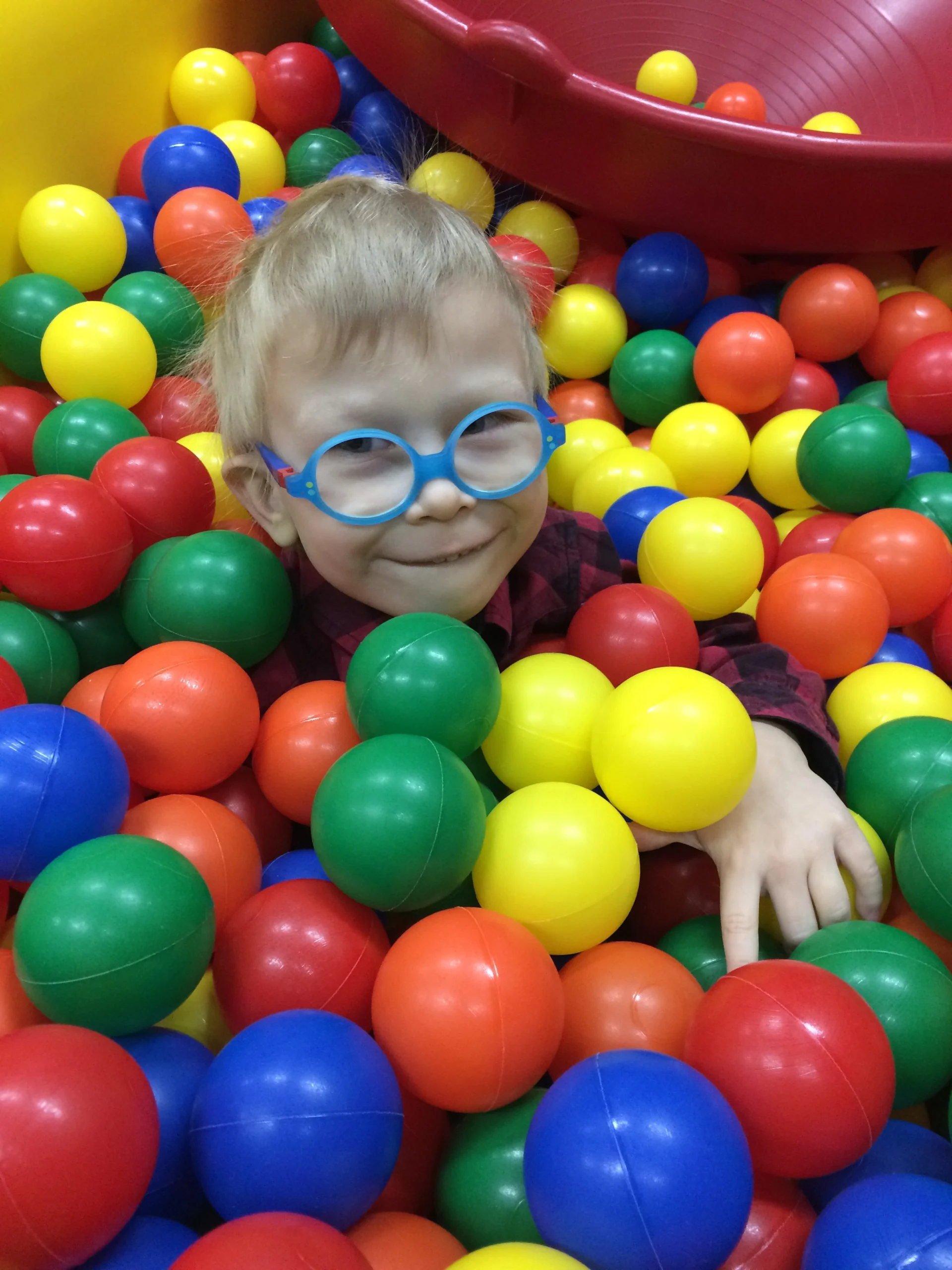
Sensory integration (SI) is the process by which the nervous system organises sensations from all sensory channels (sight, hearing, touch, balance, the sense of movement) and connects them with earlier experiences so that they can be used in purposeful action.
The theory and therapy of SI were developed by Dr Jean Ayres, who in the 1960s formulated a hypothesis about the relationship between learning difficulties and disorders of psychoneurological functions. The method came to Poland from the United States in 1993 and has been growing in popularity ever since. It is carried out by qualified therapists on the basis of a diagnosis using clinical observation and standardised tests. Sessions take place in a specially equipped room with lots of suspended equipment such as swings, hammocks and trapezes, as well as foam shapes to climb on, a ball pit and interesting objects of various textures and shapes.
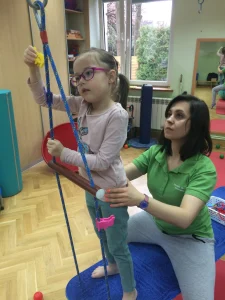
SI therapy is often called “scientific play”: during sessions the child chooses the activities that interest them and learns through the senses, while the therapist skilfully guides the play to provide the stimuli the child needs and to reduce or limit unwanted ones. Building on the child’s inner motivation, the therapist keeps setting new challenges so as to stimulate the nervous system as strongly as possible and trigger adaptive processes. As the sensory systems and the sensory integration processes in the brain work better, the child becomes able to learn new skills such as riding a bike, writing, reading and so on.
The sensory integration method is intended for children with sensory processing disorders and learning difficulties, but it is also an excellent supporting therapy for all children with developmental disorders: physical and intellectual disabilities and pervasive developmental disorders.