
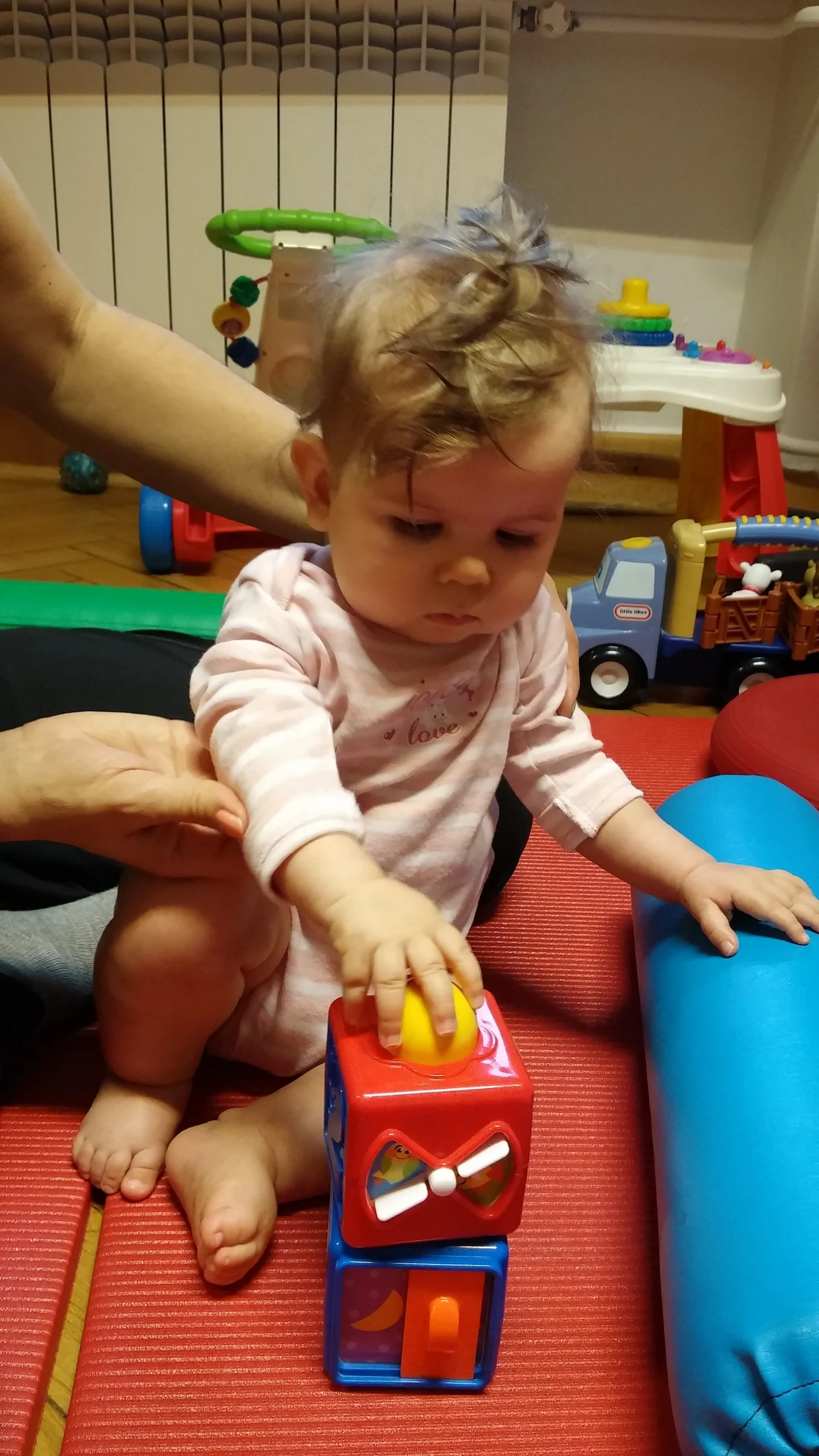
It is particularly useful in the therapy of infants and young children because it:
- can easily be included in everyday childcare,
- does not disrupt the infant’s daily routine,
- helps to build a positive bond between mum/dad and the child,
- stimulates motor, cognitive and social development,
- requires the infant to be active throughout the therapy, which shapes the young child’s positive perception of themselves and the world around them.
The concept is based on a very good understanding of typical infant development. NDT-Bobath specialists focus on developing age-appropriate motor skills while keeping the quality of movement as high as possible. The aim of therapy is to prepare the child to function in their environment. Particular attention is paid to facilitating appropriate muscle tone, sensory preparation (responding appropriately to stimuli from the environment), ensuring a full range of motion in the joints, and using the skills acquired during therapy sessions in the infant’s independent activity (moving around, playing, eating, etc.). The therapist works closely with the parents, showing them how to carry out everyday activities correctly (lifting the child, holding them in your arms, dressing and undressing, feeding, care routines and play). These activities are an important complement to therapy and are the way parents reinforce at home the movement patterns introduced during sessions. The frequency, intensity and duration of therapy are adapted individually to the needs and abilities of each infant.
The NDT-Bobath concept is intended for children with problems in their broadly understood psychomotor development, in particular children with:
- developmental delay,
- damage to and/or problems with the functioning of the central nervous system,
- increased or decreased muscle tone,
- asymmetry (including torticollis),
- orthopaedic problems (defects and deformities of the limbs),
- genetic conditions affecting the child’s development,
- feeding difficulties (sucking, swallowing).