11.05.2020
Exercising the shoulder girdle and building good posture
Do you know what shoulder protraction is?
It sounds complicated, but shoulder protraction simply means the shoulders are pushed forward in relation to the chest. Looking at the child standing sideways, the parent notices a rounded back and protruding shoulder blades. This happens because the chest muscles are too tight while the back muscles are weakened. A rounded back, often with the head pushed forward, can lead to postural defects of the spine. There can be many causes of shoulder protraction, so it is worth consulting a physiotherapist who will assess the child’s posture and choose exercises individually.
Below are some suggested exercises to stretch overly tight muscles and strengthen weakened ones.
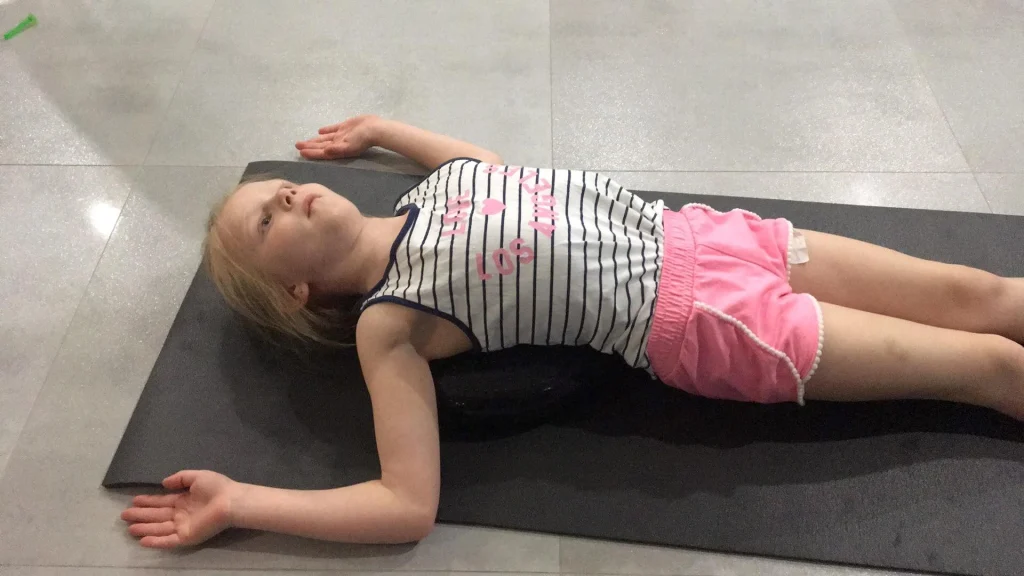
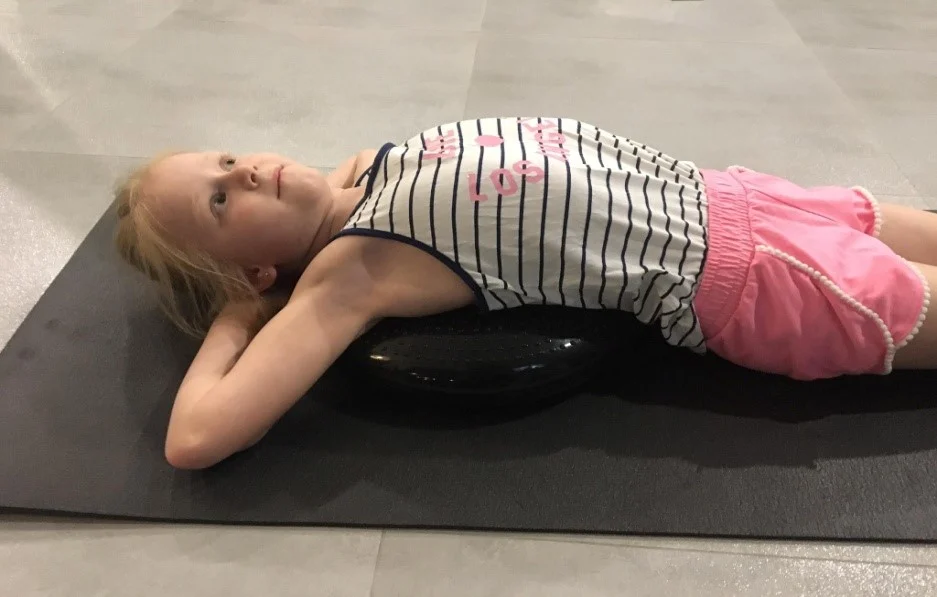
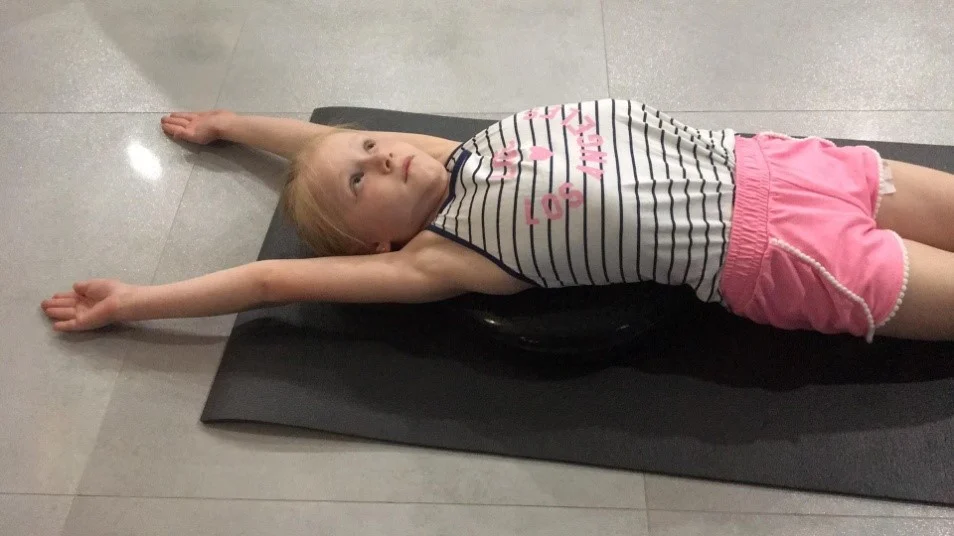
Stretching the chest muscles – the child lies on their back on a sensory cushion (or a blanket/towel folded into a block) placed at the level of the shoulder blades. The exercise has three arm positions: first the arms are bent at the elbows at 90 degrees, then the child puts their hands under their head, and finally the arms are stretched straight above the head. The child holds each position for 15 seconds, trying to touch the floor with their arms.
Passing a ball from hand to hand – the child lies on their stomach with arms and legs straight, arms above the head. The head is in line with the body (the child does not tilt their head back and looks at the floor). The parent puts a small rolled-up towel under the child’s stomach. The child holds a ball in both hands, lifts the arms and head off the floor and passes the ball from one hand to the other in front of them. Both arms work at the same time. The chest stays on the floor.
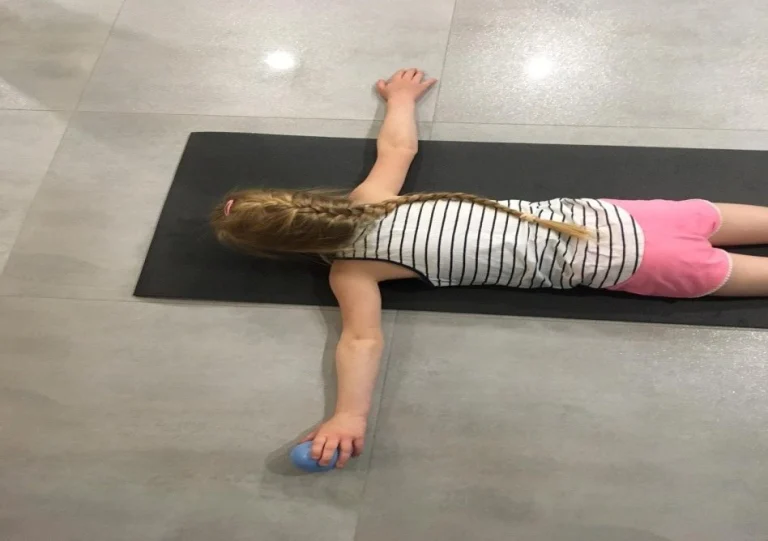
Holding the arms in a “wings” position – the child lies on their stomach with the arms in a “wings” position. The child lifts the arms and head off the floor and holds the position for about 10 seconds.
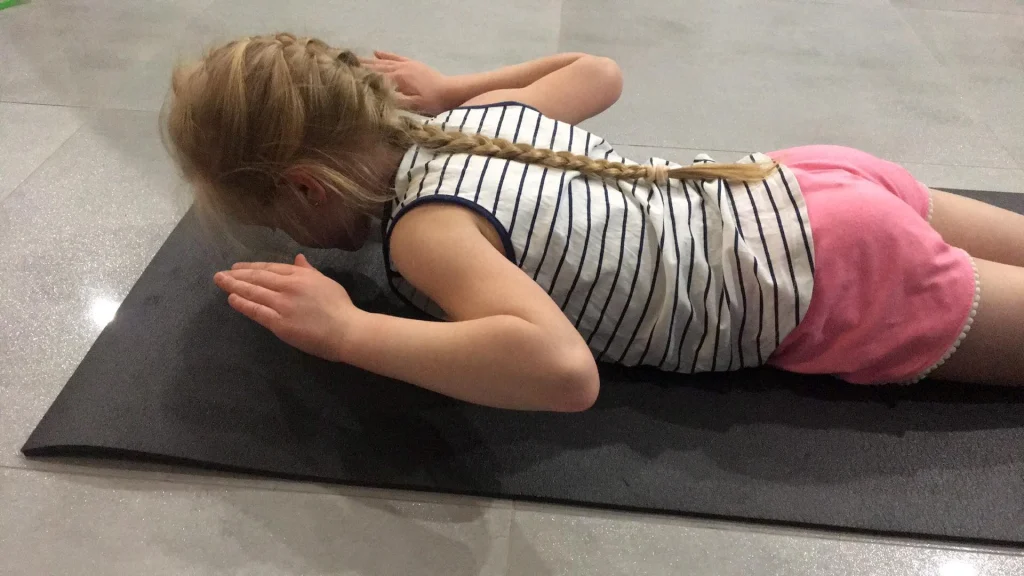
Good posture depends on many factors, and it is worth remembering that it is not only about a correctly aligned shoulder girdle. That is why it is advisable to choose exercises that affect the mechanics of the whole body. We encourage your children to take up physical activities that will not only bring them joy and great fun, but will also be a source of valuable movement experiences.
20.04.2020
While we’re staying at home, let’s exercise little feet.
The development of healthy foot arches is a process that lasts through the first few years of life. Parents watching their child walk and looking at their feet often share their concerns with physiotherapists. It is worth remembering that the “norm” here is very broad, and something that does not look great at first glance is often within normal child development. Only at around 7 years of age does a child’s gait resemble that of an adult, and the alignment of the leg and the structure of the foot stop changing as quickly as before. Even so, it is worth supporting healthy foot development from the first months of life. This is done by providing sensory experiences and letting the child play with their own feet and, later on, by choosing suitable footwear and doing exercises that support the foot muscles.
Here are 3 exercises to do at home:
- Crumpling a sheet of paper with the feet – the child sits on the floor with a sheet of paper in front of them. With bare feet, they grab the paper and try to crumple it into a ball. You can turn it into a timed race with a parent or siblings.
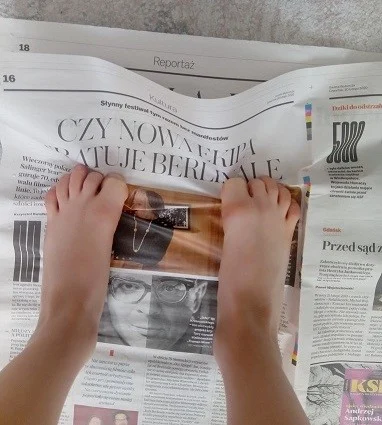
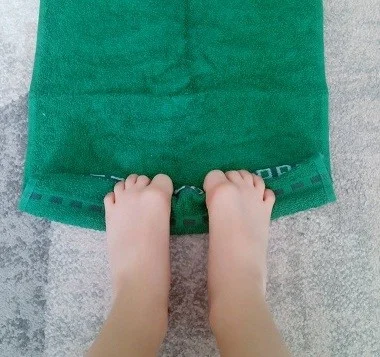
- Rolling up a towel with the toes – the child sits on the floor with a towel in front of them. The task is to roll up the towel using only the toes. This exercise strengthens the short muscles of the foot and so supports the formation of healthy arches.
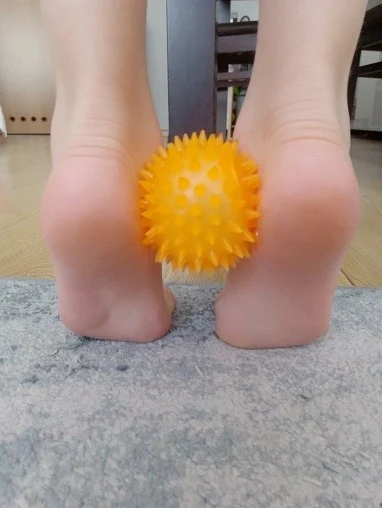
- Holding a ball between the heels – the child stands and the parent puts a small ball between their heels. The child rises onto their toes while squeezing the ball with their heels so that it doesn’t fall out. If it’s hard for the child to keep their balance on tiptoe, they can hold the parent’s hands or lean against a wall.
Although today we’re talking about the foot, it cannot be treated in isolation. The arch of the foot always develops as part of a global pattern, so the whole leg matters, starting with the hip, its position and how it works. Further up, attention should also be paid to the position of the pelvis, the whole spine and the proper work of the abdominal muscles. That’s why it is so important to include not only foot exercises in activities at home, but also to remember to strengthen the abdominal muscles.
02.04.2020
֍ ֍ ֍ ֍ ֍
Here are some movement games the child can do at home. They don’t need much space or any special equipment – a bit of floor and a ball are enough. They can easily be woven into the child’s everyday physical activity and play at home. The tasks seem simple and easy, but don’t be fooled ;). These activities really work the abdominal muscles, and strengthening them is an essential part of rehabilitation.
The number of repetitions of each exercise depends on the child’s abilities, willingness and current condition. Our physiotherapists recommend at least 10 repetitions.
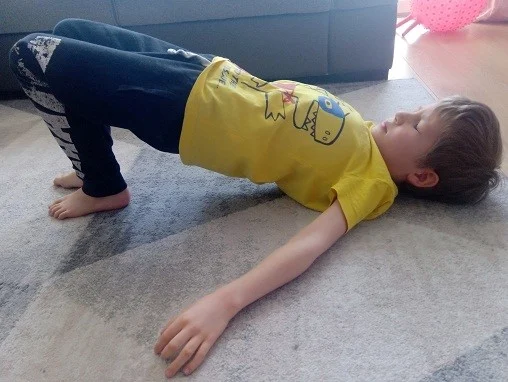
Hip bridge.
The child lies on their back, lifts their hips and holds the bridge position for 20 seconds. Then they pass a ball or a small toy from hand to hand (under their bottom). A younger child can just hold the bridge position long enough for the parent to pass the ball or toy “under the bridge”.
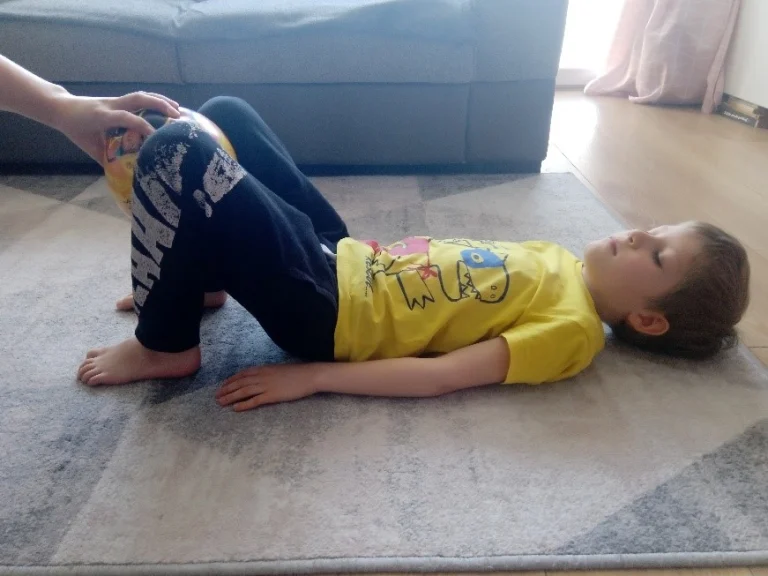
Squeezing a ball between the knees.
The child lies on their back with knees bent and feet on the floor. The ball is between the knees. The parent gently tries to pull the ball out while asking the child to squeeze it lightly (and not let it be taken away).
Passing a ball from hands to feet.
Starting position as in the previous two exercises.
The child holds a ball above their chest. The task is to lift both legs and put the ball between the feet, then lower the legs and arms to the floor. Repeat the exercise, this time passing the ball from the feet to the hands in the air, and put it down again.
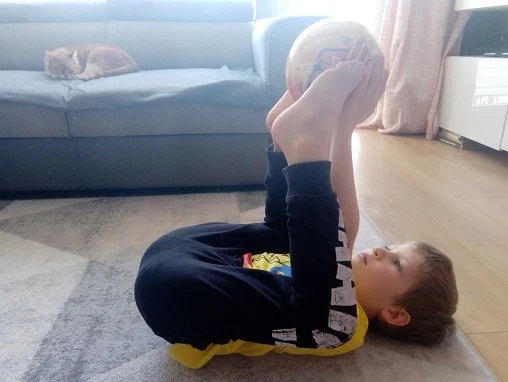
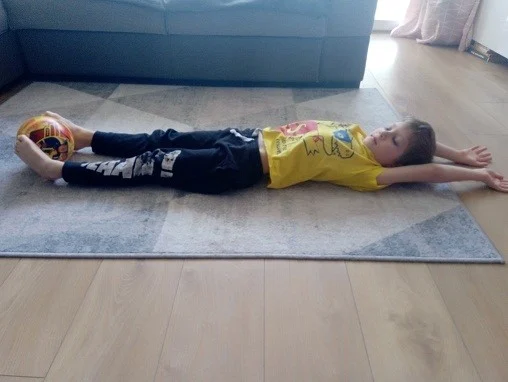
We hope the children will enjoy these activities and that they will help them burn off at least some energy 😊
֍ ֍ ֍ ֍ ֍
30.03.2020
A few ideas for games that let children satisfy their need to move:
“Obstacle course”
Build an obstacle course from things you can find at home (e.g. blankets, pillows, chairs, scarves, ropes). Children can step over them, jump over them and crawl under them.
“Pancake”
The child lies on a blanket/duvet/mattress. The parent slowly rolls them up in it, making a “pancake” (the head stays outside). You can knead and roll them gently for a while or give them a little massage, then let the child free themselves by unrolling the blanket, rolling, squeezing and wriggling out.
֍ ֍ ֍ ֍ ֍