We would like to remind you that our Centre runs a telephone information and consultation point where parents can get support for their child and family in accessing the multidisciplinary help they need. Phone: +48 697 779 051
Every question or problem is important and deserves a solution. The well-being and peace of mind of all family members affect the relationships within the family and every aspect of the child’s development.
We will tell you what help you can get at OWI from a psychologist, doctor, physiotherapist or speech therapist. We will anonymously answer the questions that, for whatever reason, you did not ask in the consulting room.
Child Protection Policy of the Early Intervention Centre of the Polish Association for Persons with Intellectual Disability in Warsaw
This document is a short version of the Child Protection Policy of the Early Intervention Centre of the Polish Association for Persons with Intellectual Disability in Warsaw (hereinafter: the “Child Protection Policy”). It is a set of rules and procedures to be followed when a child’s safety is at risk or when such situations are suspected.
The aim of this document is to present forms and ways of helping in difficult situations and the conditions for protecting children’s rights as well as possible. In the face of the risk of children experiencing violence, it is very important to set out the rules that must be followed in order to protect children.
Definitions:
- OWI PSONI – the Early Intervention Centre of the Polish Association for Persons with Intellectual Disability in Warsaw.
- Child – any person under the age of 18.
The Child Protection Policy sets out in detail, and this short version describes in a way that is easier to understand, in particular for children:
- What child harm is.
- About our staff.
- What we do if child harm in the family is found or suspected.
- What to do if harm to a child by our staff is found or suspected.
- Rules for using electronic devices with internet access.
- Rules for handing children over when they leave OWI PSONI.
- Rules for protecting the child’s image.
- Rules for protecting personal data.
The Director of OWI PSONI appoints a person responsible for the Child Protection Policy, as well as the people responsible for carrying out the individual duties and tasks set out in it.
1. What is child harm?
Child harm is the mistreatment of children, which can take various forms. It is any intentional or unintentional action by an adult or another child that has a negative effect on the physical or mental development of the child who is harmed. Harm may create a risk of bodily injury, death, psychological harm, abnormal development or violation of dignity. Harm may happen once or repeatedly.
A child may experience harm from other children, parents, carers or strangers (people the child has contact with).
Examples of child harm:
- physical violence – as a result, the child suffers physical harm (e.g. pain) or is at risk of it; this may include squeezing, holding down by force, starving, pushing, shaking, slapping, pinching, kicking, choking, or hitting with a hand or objects;
- psychological violence – non-physical harmful interaction between a child and another person; this may include belittling, humiliating, ridiculing, name-calling, mocking, rejecting, drawing the child into adults’ conflicts, or singling the child out for being different;
- sexual abuse – violating the child’s intimate sphere, forcing them to look at naked people, taking photos or videos of the child without clothes;
- neglect – failing to meet the child’s basic physical and psychological needs or failing to respect their basic rights; this may include malnutrition, clothing unsuitable for the season, poor hygiene (not taking care of the child’s cleanliness), leaving the child outside unsupervised in the evening and at night, not ensuring enough sleep and rest, not sending the child to school, or not providing medical care.
A child has the right to report to the Director of OWI PSONI, a psychologist or another member of our staff any situation in which they feel uncomfortable, as well as any action by other people that is unpleasant, painful or upsetting for them.
2. About our staff
- The employees and all staff of OWI PSONI (hereinafter together: “staff”) are knowledgeable about violence experienced by children and pay attention to the risk of it occurring.
- Staff must read the Child Protection Policy and sign a statement confirming that they have read it and undertake to apply it. Staff attend training (initial and refresher) on the Child Protection Policy.
- If there is a risk of harm to a child, staff talk to the parents, giving them information about available support and encouraging them to seek help.
- Staff monitor the child’s situation and well-being, following the rules of safe relationships between children and staff.
- Staff pay attention when a child is being harmed.
- Don’t be afraid to trust us. Staff are obliged to keep information about child harm confidential. Staff share such information only within OWI PSONI and with other authorised institutions as part of intervention measures.
- Staff are recruited according to safe recruitment principles to ensure the best possible protection of children.
- If you have any comments about the behaviour of staff, report them to the Director or a psychologist of OWI PSONI.
3. What we do if child harm in the family is found or suspected
- If our staff find that a child is or may be being harmed, every member of staff must notify the Director of OWI PSONI and write an official note.
- A meeting is organised with the parents of the child whose harm is found or suspected.
- During the meeting, the psychologist informs the parents that harm to the child has been found or is suspected. At least one person responsible for the Child Protection Policy takes part in the meeting.
- During the meeting, the parents are informed about the available options for supporting the family and about the obligation to report the incident to the relevant authorities (e.g. the police, the public prosecutor, the family court, the social welfare centre, the chair of the interdisciplinary team).
- The psychologist or another person attending the meeting writes a note of the conversation with the parents and of all the actions taken.
- The psychologist prepares a support plan for the child, which describes the support offered to the child and their referral to a specialist facility. The support plan is presented to the parents.
- In more complex cases, an intervention team is set up. An intervention record is kept of the course of the intervention.
4. What to do if harm to a child by our staff is found or suspected
- Everyone is obliged to inform the Director of OWI PSONI if a child is being harmed by a member of staff or if such harm is suspected.
- In addition to informing the Director, staff must write an official note.
- Parents have the right to make a complaint (in writing, by e-mail or orally) if they find or suspect that their child has been harmed by a member of staff. A complaint made orally is recorded in a note, which is also signed by the person making the complaint.
- The Director calls a meeting to discuss the child’s situation. Another person with knowledge of child harm may take part in the meeting.
- If harm to a child by a member of staff is found or reasonably suspected, the Director removes that person from working with children and informs the child’s parents and the relevant institutions.
- Steps are taken in accordance with the law against any member of staff who is found or suspected to have committed an offence.
5. Rules for using electronic devices with internet access
Children in the OWI PSONI building do not have access to electronic devices or the internet. There is a password-protected Wi-Fi network at OWI PSONI.
6. Rules for handing children over when they leave OWI PSONI
- A child may be collected from OWI PSONI by their parents/carers or by an adult authorised by them in writing who can ensure the child’s full safety.
- If one of the parents has limited or no parental rights, staff must follow the family court’s ruling when handing the child over.
- A child may not be handed over to anyone other than their parents/legal guardians without written authorisation.
- A child cannot be handed over to anyone (including parents) who appears to be under the influence of alcohol or other intoxicating substances.
- Any attempt to collect a child by a parent or authorised person who appears to be under the influence of alcohol or other intoxicating substances must be reported to the Coordinator or the Director of OWI PSONI. Staff will ask that person to leave the premises and, if no other person authorised to collect the child can be contacted, will call the police.
- Repeated attempts to collect a child by a person who appears to be under the influence of alcohol or other psychoactive substances will be reported by the Director of OWI PSONI to the relevant services so that the child’s family situation can be investigated.
7. Rules for protecting the child’s image
- The child’s image is protected.
- Processing a child’s image recorded in any form (photograph, video) requires the parents’ written consent.
- OWI PSONI staff may not allow other people, including the media, to record a child’s image on the premises without the written consent of the child’s parent.
8. Rules for protecting personal data
- Every child has the right to the protection of their personal data.
- Children’s personal data is processed only for the purpose for which it was collected.
- Parents and persons authorised by the Controller have access to the child’s personal data.
- We protect personal data against access by unauthorised persons, loss, damage or destruction.
- Staff do not share information about children and their parents with other people, including the media.
Remember! If:
- anything has happened that worries you,
- someone has hurt you,
- or someone’s behaviour has crossed your boundaries (e.g. they did something you didn’t want),
tell our staff. Don’t be afraid to ask for help. We will solve the problem so that you feel safe.
ATTENTION PARENTS!
The President of the National Health Fund (NFZ) has signed ORDER No. 181/2023/DSOZ of 14 December 2023, which changes the conditions and delivery of services, among others at the AUTISM CLINIC.
Unfortunately, these changes are UNFAVOURABLE for our patients. Above all, they require an additional 25 minutes of documentation after every therapy session with a patient. As a result, a specialist who could previously see 6 patients a day will now see 3, which means that some patients will not be able to attend therapy sessions.
This will significantly lengthen the waiting lists for consultations and therapy.
Another UNFAVOURABLE provision is the lack of funding for all children taking part in group sessions. The NFZ will cover the cost of only 1 child per group; the other participants will not be funded. It should be stressed that for some patients, especially teenagers and adults, whom we also see at the Clinic, GROUP SESSIONS are one of the best forms of therapy and an opportunity to develop social skills.
Directors of facilities from all over Poland, concerned about the proposed changes, have since October 2023 asked for these provisions to be dropped, proposed other solutions and called for public consultation. We sent such letters to the Ministry of Health, the National Health Fund, the Patient Ombudsman and the National Consultant – unfortunately, we have not received a reply from anyone.
On 15 December 2023, the order of the President of the NFZ was published in the NFZ legal acts database (www.baw.nfz.gov.pl); its provisions apply from 1 January 2024.
We regret to inform you that, due to these provisions, we are forced to limit access to services funded by the NFZ. Having to reserve 25 minutes for documentation after every session reduces our availability by about one third.
On the parents’ initiative, you can sign a letter to the President of the NFZ, the Ombudsman for Children and the Patient Ombudsman. The letter (in Polish) can be downloaded from the OWI website and sent by e-mail to:
or downloaded, signed and handed in at the OWI Registration desk (our staff will submit it to the above institutions on your behalf).
Yours sincerely,
OWI Management
We are deeply moved and saddened by the death of Dr Maria Borkowska, MD, a paediatrician, rehabilitation specialist, academic teacher and consultant, and the author of many scientific articles and books that contributed to a better understanding of the difficulties of children with developmental disorders, including physical and intellectual disabilities. We owe her a great deal, above all the introduction of the NDT-Bobath method and Sensory Integration in Poland.
For many years Dr Borkowska worked at our Association’s Early Intervention Centre, helping patients and their families and training new generations of physiotherapists and SI therapists.
Her knowledge, professionalism and commitment will remain in our grateful memory.
OWI Management and Staff
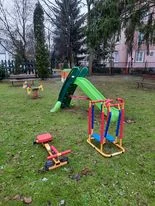
The PSONI Early Intervention Centre is pleased to announce that, in preparation for spring play, we have bought equipment for our therapeutic playground. The purchase was funded by the project “Additional equipment for Warsaw non-governmental organisations – regranting”, run by the Rubin Foundation and funded by the City of Warsaw.
Thank you 😀
Dear All,
For more than 10 years, the Polish Association for Persons with Intellectual Disability has been fighting in various ways for early intervention and comprehensive rehabilitation of children to get the place they deserve – for a chance for children born prematurely and for those whose disability requires urgent, intensive and often many years of rehabilitation. In our efforts we are approaching – or to be precise, we have hit – a wall. With NFZ funding unchanged for 13 years and operating costs rising many times over, the continued operation of PSONI early intervention centres is at risk. Letters, meetings, visits and the participation of NGO representatives in various bodies have so far been ineffective – each time there is 100% understanding of the situation, declarations of help, and then… NOTHING!
Declaring 2018 the Year of Early Intervention and publicising the importance of this form of support for society as a whole did not help either. The current pandemic situation in the health service leaves no illusions that children’s rehabilitation will become a priority. Further appeals from our community last year and this year went unnoticed. More facilities are ending or planning to end their NFZ contracts because they are drastically underfunded. As a consequence, access to free services is restricted, and most families are left with commercial, paid services.
Over many years of our facilities’ work, thanks to the daily efforts of teams of dedicated specialists, thousands of children with disabilities have got back on their feet, started to speak and develop. Parents facing this life situation in future may no longer receive the help the State owes them. Growing commercialisation, far from a systemic increase in access to free services, and a dominant medical model of support, far from interdisciplinary teamwork, is a path that raises concern for the future of children who were dealt a difficult hand from the very start.
That is why the Main Board fully supports the parents’ petition to Prime Minister Mateusz Morawiecki published at www.petycje.online.com.
We support the parents, and at the same time we are once again writing to the authorities.
We ask you to share the petition as widely as possible and sign it – parents, staff, friends and families of people with disabilities.
Kind regards,
Mariusz Mituś
Vice-President of the Main Board
OWI Management and Staff wish you a healthy, happy Easter, delicious Easter eggs and lots of fun on Wet Monday!
18.01.2021
Dear Parents and Carers,
A New Year has begun, and with it new hopes, challenges and resolutions. We wish you and your children a good year that brings health, kindness and lots of joy 🙂
We believe that the world will soon return to normal and that at our Centre we too will be able to drop the various restrictions that are so often a burden.
We appreciate the efforts of everyone who tries to take part in sessions or practises with their child at home.
Let’s also not forget that, besides all the activities that stimulate development, what really matters to a child is free play. Play is what allows a child to discover, experiment, gain experience and learn various skills at their own pace.
So let’s remember that our children, even if they need stimulation and support in their development, should have the time and opportunity simply to play – to discover the world in their own way and at their own pace 🙂
Dear Parents and Carers,
Please provide up-to-date disability certificates.
12.10.2020
Dear All,
Out of concern for our Patients’ health, we are sending you the current procedures for therapy sessions at our Centre. They were drawn up in line with the guidelines of the Ministry of National Education, the Ministry of Health and the Chief Sanitary Inspectorate. In response to your requests, we have made it possible for Patients to stay at OWI without having to go outside between sessions. Please read the rules:
- Therapy takes place at the times given in the therapy contracts. During breaks between sessions, children are looked after by OWI therapists.
- The child enters the Centre in their outdoor clothes, accompanied by the therapist with whom they start the session. Together they change in the cloakroom and go to the right room. Parents wait for their children outside. Parents cannot stay in the OWI building.
Please provide your child with a bag for outdoor clothes (e.g. a large carrier bag or a bin bag) and things brought to OWI, labelled with the child’s full name; a note with the phone number of the person accompanying the child to OWI that day; a bag for shoes; indoor shoes; and, if needed, a change of clothes, a nappy, and a drink and food.
- The therapist who has the last session with the child takes them outside through the exit door and hands them over to the Parents. Parents must wait for the child in front of the door 5–10 minutes before the scheduled end of the session.
- Therapists bringing the children out do not give parents information about the sessions. At a parent’s written request, therapists can give information about the sessions by e-mail or phone once a month.
- In exceptional situations, therapists call the parents (on the number given by the parent that day). The parent must come to the Centre within 10 minutes.
- If the child needs to eat a simple meal brought from home (a sandwich, fruit), the Centre makes this possible. It is not possible to heat meals or provide cutlery or dishes.
- A Parent may feed the child. Please let the therapists know, and the child will be brought outside the Centre.
- If a parent wants to accompany the child to the toilet, they should tell the therapists. They can then go with the child to the toilet opposite the entrance to the Centre (level -1).
- For safety reasons, please provide your child with non-slip socks, especially for group sessions.
- Please bring and collect your children on time.
- Please remember to provide your child every time with:
Required:
- a bag for clothes (e.g. a large carrier bag or a bin bag) labelled with the child’s full name
- a bag for shoes
- a note with the phone number of the person waiting for the child in front of the building
- indoor shoes
Optional:
- a change of clothes
- non-slip socks
- a nappy
- food and drink
Yours sincerely – OWI Management
Procedure for access to medical records
- Parents/carers are asked to submit requests for medical records in writing (on paper or electronically); the waiting time for access to medical records is 14 days. Records are issued as certified copies.
- Please note that psychological records are not part of medical records (under Article 14 of the Act on the Profession of Psychologist and the Professional Self-Government of Psychologists, Journal of Laws No. 73 of 2001, item 763) and are covered by professional confidentiality.
- Psychological records are issued in the form of a psychological opinion (waiting time up to 30 days).
Yours sincerely, OWI Management
Dear All, dear Children,
welcome to the new school year! We hope the summer holidays were a good and peaceful time.
For sanitary reasons we are obliged to follow many procedures, which may cause some inconvenience. We count on your understanding and cooperation. We will do everything we can to make your time with us safe and to make the children feel comfortable.
HOUSE RULES
OF THE EARLY INTERVENTION CENTRE OF THE PSONI MAIN BOARD IN WARSAW
SAFETY PROCEDURES DURING THE SARS-COV-2 EPIDEMIC
1. Organisation of the Centre’s work
- To reduce the risk of transmitting infection, children are registered by phone (+48 22 844-06-37) or electronically (rejestracja.owi@psoni.org.pl).
- During the phone call before the first session, staff carry out a preliminary screening questionnaire.
- Any contact with outside visitors at the registration desk should take place only in exceptional cases, keeping a distance of at least 2 m from the staff member.
- Therapy times are set individually for each child, and the parent/carer must strictly observe the start and end times of therapy.
- Third parties who are not employees are strictly forbidden from entering the Centre. This does not apply to parents/carers of children booked for consultations or infant physiotherapy – in that case only one parent/carer of the patient may enter the Centre.
- Employees, patients and their parents/carers who show symptoms of a respiratory infection, fever, shortness of breath, cough, diarrhoea, vomiting, or loss of smell and taste, or who have been in contact with a person suspected of SARS-CoV-2 infection, are strictly forbidden from entering until final verification and a negative test result of that person (suspected of SARS-CoV-2 infection). Patients are advised to use remote therapy.
- If a person in quarantine or under epidemiological supervision lives in the child’s household, the child is strictly forbidden from entering the Centre. They are advised to stay at home and use remote therapy.
- People bringing children must take precautions: cover their mouth and nose, disinfect their hands or put on disposable gloves (preferred) before entering the facility, and use disposable shoe covers (or a change of shoes). The child’s parent/carer must bring disposable pads, toys (for infants), a pen (to fill in the questionnaire) and a bag for any used disposable items every time. The parent/carer takes all items they brought with them.
- Prams and pushchairs may not be brought into the Centre.
- At the first visit, the patient’s parent/carer must sign the relevant statements: that they have read the rules and agree to follow them, and that they consent to the child’s body temperature being measured on admission and as a check (if worrying symptoms occur) during diagnostic sessions and therapy sessions. The statement also includes a contact phone number to ensure quick and effective communication with the parent/carer.
2. Visiting the Centre
- Only healthy children without symptoms suggesting an infectious disease take part in therapy. Patients with symptoms such as a runny nose, cough, rash, stomach ache, vomiting, diarrhoea or a raised temperature will not be admitted. Parents are advised to check the child’s temperature at home before bringing them to the Centre. If a person in quarantine or under epidemiological supervision lives in the child’s household, the child is strictly forbidden from entering the Centre. They are advised to stay at home and use remote therapy.
- For the first visit, please arrive 10–15 minutes before the session starts to sign the relevant statements.
- For subsequent therapy visits, please arrive 5 minutes before the session starts and collect the child exactly at the agreed time.
- The child comes to the Centre with one parent/carer. Parents/carers should bring gloves, masks (personal protective equipment), disposable shoe covers and a pen. The child does not bring any of their own toys to sessions, except for infants.
- Before entering the Centre, the parent/legal guardian fills in an updated SARS-CoV-2 screening questionnaire.
- The patient and parent/carer wait in front of the Centre. A member of staff measures the child’s temperature. Before the temperature is measured, the carer’s consent to the processing of the personal data given in the questionnaire referred to in point 2 and to the temperature measurement is obtained. Consent is voluntary; refusal means the child will not be admitted to the Centre. Only patients and their parents/carers (for consultations or NDT therapy) whose body temperature is normal (up to 36.9°C) will be admitted to the Centre.
- On entering the Centre, every employee, child and parent/carer (for consultations or NDT therapy) must disinfect their hands or put on disposable gloves.
- Inside the Centre, the parent/carer (for consultations or NDT therapy) wears a protective mask, disposable gloves and disposable shoe covers or indoor shoes.
- During the COVID-19 epidemic, the Centre’s waiting room is closed. Parents/carers (for consultations or NDT therapy) stay with the child during the visit in the specialist’s room.
- For therapy sessions held in the room with the child only, the parent/carer waits outside the OWI building. Due to sanitary and epidemiological procedures, after each session the child is taken back to the parent/carer outside the OWI building, where they wait for the next session (applies to therapy sessions only). The parent/carer must therefore wait in front of the OWI building at the time set by the therapist.
3. General recommendations
- If the epidemiological interview is positive or there are symptoms of infection (fever, cough, runny nose, rash, muscle pain, sore throat, shortness of breath, other unusual symptoms) based on the questionnaire carried out by a member of the Centre’s staff, and a risk of SARS-CoV-2 infection is found, refusing the service is justified.
- The facility has a designated room for isolating a person diagnosed with symptoms of illness, allowing a child suspected of COVID-19 to be isolated until their parents/carers arrive, or an employee suspected of COVID-19 to be isolated.
- Employees have access to generally recommended personal protective equipment and surface disinfectants.
- Carpets, plush toys and other items that cannot be disinfected have been removed from the rooms. The equipment of the rooms is regularly disinfected by a member of staff.
- Before starting and after finishing work, each employee disinfects their workstation.
- The room should be aired after each visit.
- Appropriate disinfectants are used to disinfect materials and rooms. Counters, handrails, hand hygiene dispensers, disposable towel dispensers and waste bins are disinfected as often as possible, at least three times a day.
30.03.2020
Dear Parents and Carers,
In this difficult period for you, your children and all of us, we ask you to stay calm and follow all the recommended safety measures.
We realise that being isolated at home with your child, giving up contact with people (sometimes very close ones, such as grandparents) and time at playgrounds is not easy. For children with developmental difficulties it is often a real challenge. Not being able to attend therapy sessions or consultations in person may also cause you anxiety and worry. However, we must be patient and get through this special time.
While we wait to be able to meet you again, we assure you that all the necessary information and recommendations will be sent to you by e-mail. If you have any questions or need to contact us, please do so electronically.
We send you warm thoughts; despite all the adversity, hardship and uncertainty, may this be as good a time as possible for your families.
Yours sincerely,
OWI Management and Staff
On our website we will post ideas for activities for children that can be done at home.
In the Child and Family Zone section you will find ideas for physiotherapy, speech therapy and psychological-educational exercises and games. We also offer a Reading Corner and a Music Corner. We hope that each of you will be able to choose activities suited to your child’s age, needs and abilities.
In the Parent Zone you will find suggestions from our specialists that may help the whole family cope during this exceptional time.
֍ ֍ ֍ ֍ ֍
30.03.2020
Let’s all remember to follow the recommendations and precautions related to the epidemic.
The basic thing is washing hands – let’s remind children about it! Maybe these (Polish) rhymes and the video will encourage them?
“W łazience”
Woda w kranie- szum, szum, szum,
Mydło pluska- plum, plum, plum,
Myję rączki- szur, szur, szur,
I brud znika- bul, bul, bul.
P. Siewiera-Kozłowska
“Czyste ręce”
Dziś od rana plusk w łazience,
To ……. (tu można wstawić imię dziecka) myje ręce.
Najpierw w wodzie opłukuję,
Potem mydłem nasmaruję.
Znowu woda- istny cud!
W umywalkę puk, puk, puk.
Jeszcze tylko kran zakręcę
I już czyste moje ręce.
I. Salach (adapted)
“Myjemy ręce”
Zaraz umyję swoje ręce,
tylko w kranie wodę odkręcę.
Plusk, plusk, leci woda,
na mycie rąk wody nie szkoda.
Woda z kranu leci
i woła:
myjcie ręce dzieci.
Ł. Grodzicka
֍ ֍ ֍ ֍ ֍
And here is an experiment showing the power of soap and water. We encourage you to try it with your child:
֍ ֍ ֍ ֍ ֍
Children will certainly find it easier to understand the current situation when talking about the coronavirus is supported by pictures. Here are two (Polish) picture books on the subject.
Link:
https://drive.google.com/file/d/1SeH5KBgbo0UGTTQjGnavj2mpJJDRvNHK/view?usp=sharing
Link:
֍ ֍ ֍ ֍ ֍
We also encourage you to read together – it is a wonderful way to spend time together.
Children love rhyming texts, so today we suggest some rhymes – maybe you’ll find something you know well, that the children remember and like, or maybe you’ll discover something new?
We would like reading together to be a time of joy for the children and for you. Remember that your little one needs to move, so let them stand up or play at the same time – they don’t always have to sit still and concentrate on the text to listen.
Let your child choose the book and come back to a favourite story as many times as they like. And let’s not quiz them or check whether they understood or remembered. Let’s not forget that children learn through play 🙂
We wish you many lovely moments of reading!
֍ ֍ ֍ ֍ ֍
09.04.2020
At Easter, all the little bunnies want to hop and frolic in the meadow and the garden. But they can do it at home too, especially as they have extra energy after staying indoors for so long… Here are some movement games (in Polish) that can make the time before and during Easter more fun for your children:
https://www.dzieckiembadz.pl/2017/04/wielkanocne-zabawy-ruchowe.html
Now the bunny, the chick and the lamb want to sing the children a song painted in sand 🙂
Where did the chick come from and what did it grow into? Children can find out here and draw it together with Antek:
https://drive.google.com/file/d/1AXDMEvQ_siisyKjQ8ae5GrmOut92GVwV/view?usp=sharing
https://drive.google.com/file/d/1rkTsuijFlTtdJxOHIZEsJQayMFV8BMMz/view?usp=sharing
֍ ֍ ֍ ֍ ֍
When tummies start rumbling, you can find inspiration here for something tasty and pretty for hungry little ones:
https://pl.pinterest.com/bmk46/wielkanocne-przysmaki/
֍ ֍ ֍ ֍ ֍
And here is a spring massage for little ones: while saying a rhyme about a sleeping bear dreaming of spring and Easter eggs, “draw” on the child’s back with your fingers – tap dots, draw stripes, a checked pattern, little snails and little chicks (circle, circle, legs, beak), and finish by stroking the back with your whole hands.
And a spring rhyme for slightly older children, to recite and act out together with your child:
“Trzy baziowe koty” (Three catkin cats) – in Polish
Na wiosennej wierzbie, (arms stretched up like tree branches)
tuż nad rzeczką małą, (the right hand shows a winding stream)
trzy baziowe kotki, (the children meow and “lick” their fur like kittens)
lekko się huśtają. (the “willow” gesture again, but this time the arms sway in the air)
Deszcz drobny popadał, (raised arms slowly come down while the fingers wiggle like falling rain)
futerka im zmoczył, (the children quietly say “brrrrr” and shake off their “wet” fur)
miauczą wniebogłosy, (louder and louder until the end of the rhyme)
trzy baziowe koty!
A. Jankowska
֍ ֍ ֍ ֍ ֍
If you want to keep up the tradition and have some splashing fun for the whole family on Wet Monday (Śmigus-Dyngus), it’s best to do it right after waking up, while you’re still in your pyjamas (so you can change quickly). Agree on the rules beforehand (e.g. the evening before) so that the game doesn’t get out of hand. You might agree, for example, to spray each other with a plant mister or splash each other with a clean paintbrush dipped in water.
֍ ֍ ֍ ֍ ֍
07.04.2020
In April we all go blue!
Did you know that April is World Autism Awareness Month? All over the world, many events, workshops and training sessions take place at this time to spread knowledge about autism. In Europe, according to UN data, 1 in 150 children is diagnosed with autism spectrum disorder.
Autism is a pervasive developmental disorder. It often co-occurs with other developmental conditions, such as intellectual disability, epilepsy, visual and/or hearing impairments and cerebral palsy. It shows itself as a set of qualitative differences in behaviour, which ICD-10 describes in three areas:
- difficulties in establishing and maintaining social contacts – this prevents typical learning about and experiencing the surrounding world and makes functioning in society harder;
- limited imagination and ability to engage in social and creative play, stereotyped activities, rigid behaviour and interests;
- specific speech disorders or absence of speech.
Autistic children also have sensory integration (SI) difficulties, such as tactile, visual or auditory hypersensitivity, which may be accompanied by strong anxiety reactions. Difficulties processing sensory stimuli often cause behavioural difficulties, e.g. compulsions, destructive behaviour, aggression or self-harm.
Autism stays with the child and their family for life. It is important not only to diagnose it early, but also to start therapy as soon as possible. Children receiving therapy at our Centre are cared for by a whole interdisciplinary team, which includes doctors, special educators, psychologists, speech therapists, physiotherapists and sensory integration therapists. Together we adapt the therapy plan to the child’s individual needs, focusing on the areas where they have the greatest difficulties. At the Early Intervention stage, we provide comprehensive support not only to our patients but also to their families. In this way we give children a solid foundation that allows them to start school and, later, adult life as well as possible.
Don’t stay in the dark about autism!
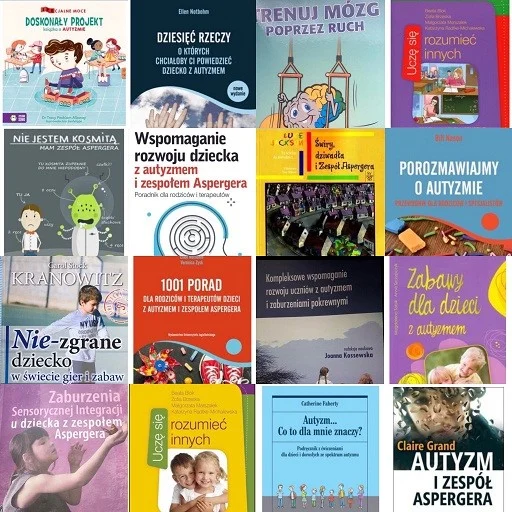
If you would like to learn more about autism, we encourage you to read about it. Below you will find a collection of the (Polish) titles we think are the most interesting and worth recommending.
֍ ֍ ֍ ֍ ֍